05 June 2026
Ever rolled down your windows at a
stoplight, hoping that noise wasn't coming from your own car?
You pull up
to a red light on College Mall Road, tap the brakes, and there it is… a sharp
squeal that turns a few heads. You tell yourself it's probably nothing. Maybe
it's the weather. Maybe it'll disappear tomorrow. A few weeks later, that
squeal has transformed into a grinding sound that makes every stop feel like
your vehicle is filing metal against metal.
Vehicles
known for reliability and everyday practicality often earn the trust of their
owners. That trust is well deserved, but it can also lead drivers to postpone
maintenance because the vehicle still feels perfectly capable of getting from
point A to point B. When it comes to Nissan brakes, however, unusual sounds are
often one of the earliest warning signs that something needs attention. A
squeal may indicate brake pad wear, while a grinding noise can signal that the
issue has progressed far enough to affect other components, including the
rotors.
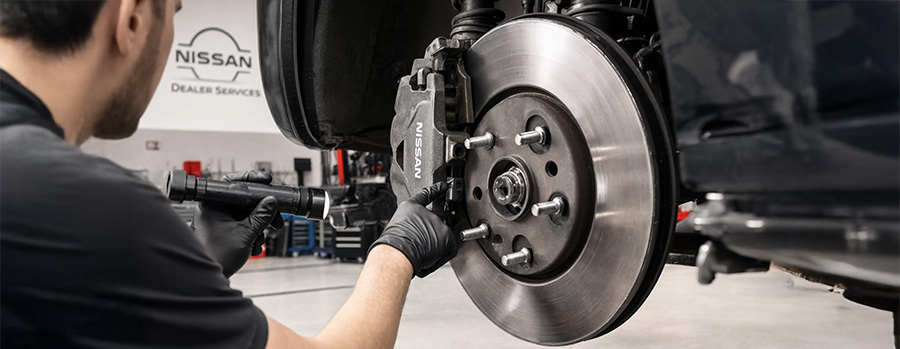
At Community
Nissan of Bloomington, brake concerns are among the most common maintenance
issues technicians inspect, especially when drivers have been hearing noises
for weeks before scheduling service.
In this
guide, we'll explain what squealing and grinding noises actually mean, how
rotor damage occurs, warning signs you shouldn't ignore, and when it's time to
schedule Nissan brake service before a smaller repair becomes a much larger
one.
Why Your Brakes Are Trying to Get Your
Attention
Your brake
system has one important job: helping your vehicle slow down and stop safely.
Every time
you press the brake pedal, the brake pads clamp against the rotors, creating
friction that reduces speed. Over thousands of stops, those brake pads
naturally wear down. As components wear, your brake system may begin
communicating in the only language it has: noise.
Not every
sound means immediate danger. For example, moisture, overnight condensation, or
light surface rust can occasionally create temporary noises during the first
few stops of the day. However, brakes rarely become quieter as they wear out.
The real
challenge is understanding whether the sound you're hearing is an early warning
or a sign that damage may already be occurring.
The Difference Between Squealing and Grinding
Nissan Brakes
If your
brakes could talk, squealing and grinding would be two very different
conversations.
Squealing: The Early Warning
A
high-pitched squealing sound is often one of the first indicators that brake
pads are wearing down. Many brake pads include wear indicators. A small metal
tab designed to create a squealing noise when the friction material reaches a
certain level of wear. Think of them as built-in reminders that your brakes
need attention.
Other
factors can sometimes contribute to squealing, including:
·
Moisture on brake components
·
Surface rust after the vehicle sits overnight
·
Brake dust buildup
·
Glazed brake pads caused by excessive heat
An
occasional squeal that disappears quickly may not indicate a major problem.
However, if the noise becomes frequent or consistent, it's worth scheduling an
inspection.
Grinding: The Expensive Warning
Grinding is
a different story. When brake pads wear beyond their usable friction material,
the metal backing plate can come into contact with the rotor. Instead of
friction material pressing against the rotor, you're dealing with
metal-on-metal contact. That's where things get expensive.
Grinding
noises can indicate:
·
Severely worn brake pads
·
Rotor damage
·
Excessive brake wear
·
The need for more extensive Nissan brake repair
Think of
squealing as your brakes clearing their throat. Grinding is your brakes
practically shouting. Unlike a squeal, a grinding sound rarely gets better with
time.
Delaying Brake Service Can Backfire
Brake rotors
are the smooth metal discs your brake pads press against to slow the vehicle.
When brake pads are replaced at the appropriate time, rotors can often continue
functioning normally. But when worn brake pads remain in service for too long,
they may begin damaging the rotor surface.

This can
lead to:
·
Deep grooves in the rotor
·
Uneven rotor wear
·
Excessive heat buildup
·
Reduced braking smoothness
·
Additional repair requirements
The longer
the metal-on-metal contact continues, the greater the potential for rotor
damage. That's why addressing brake concerns early is usually the smarter move.
Replacing worn Nissan brake pads is often less involved than replacing both
brake pads and damaged rotors. More importantly, maintaining healthy brake
components helps preserve the stopping performance your vehicle was designed to
deliver.
Five Signs It's Time to Schedule Nissan Brake
Service
Brake noise
rarely arrives alone. Other warning signs often show up alongside it.
1. The
Squealing Never Goes Away: If your brakes squeal nearly every time you stop, it's time for an
inspection. Consistent noise often indicates wear that deserves professional
attention.
2. You Hear
Grinding During Stops: Grinding sounds should never be ignored. This can indicate severe brake
pad wear and potential rotor involvement.
3. The
Steering Wheel Vibrates While Braking: If the steering wheel shakes when you
slow down, uneven rotor wear or rotor distortion may be contributing to the
problem.
4. The Brake
Pedal Feels Different: A brake pedal that feels unusually soft, spongy, or inconsistent can
indicate issues within the braking system. Pedal changes deserve prompt
inspection.
5. Your
Vehicle Takes Longer to Stop: You know how your vehicle normally responds. If braking
performance feels less responsive than usual, it's worth having the system
evaluated.
Can You Change Brake Pads Yourself?
Many vehicle
owners search for information on how to change the brake pads Nissan models
use, especially if they enjoy tackling maintenance projects themselves. While
replacing brake pads may appear straightforward, a complete brake service
involves more than simply installing new pads.
Brake
technicians also evaluate:
·
Rotor condition
·
Brake hardware
·
Wear patterns
·
Brake fluid condition
·
Overall system performance
An
experienced DIY enthusiast may feel comfortable replacing brake pads, but a
professional inspection can help identify issues that aren't immediately
visible during a routine brake job. After all, the goal isn't simply replacing
parts. It's ensuring the entire braking system works as intended.
Why Professional Nissan Brake Service Matters
When your
brakes start making noise, getting an accurate diagnosis matters.
Factory-trained Nissan technicians understand the braking systems, components,
and maintenance requirements found across Nissan vehicles. During a Nissan
brake service visit, technicians can inspect brake pads, rotors, brake fluid,
and related components to help identify issues before they become more costly
repairs.
Drivers may
also be able to take advantage of available Nissan brake service coupons and service specials, making it easier
to stay on top of routine maintenance.
Final Thoughts: Don't Wait for Grinding
Brake
problems rarely appear overnight. More often, they start with subtle warning
signs like a faint squeal during your morning commute, a slight vibration at a
stoplight, or braking that feels just a little different than usual. That's why
paying attention to early symptoms matters. A squealing sound may indicate your
Nissan brakes are wearing down, while grinding can suggest the issue has
progressed to affect the rotors. Addressing brake concerns early can help
maintain performance and potentially prevent more extensive repairs.
If you've
noticed unusual brake noises, vibration while braking, or changes in stopping
performance, a professional inspection can help identify the cause before
additional damage occurs.
Schedule
your Nissan brake service with Community Nissan of Bloomington today and
keep every stop confident, smooth, and worry-free.
